GRADED - Global impacts of agricultural trade and consumption on ecosystems and biodiversity
Agriculture is one of the main drivers of current biodiversity loss, with agricultural areas covering half of all habitable land on earth. With the expected growth of the global human population and changing diets due to an expanding global middle class, demand for agricultural products is expected to further increase. More than 60% of the species currently threatened by extinction are being directly negatively affected by agricultural activity, especially in countries of the Global South. However, a significant part of the agricultural production in these areas is used to produce goods for export to and consumption in the world’s major economies, often nations in the Global North.
GRADED aims to:- Advance methods to quantify how agricultural production and trade impact biodiversity and ecosystem change.
- Contribute to the harmonization and communication of approaches across existing initiatives in the field.
- Investigate the roles of Germany and China in driving ecosystem change and biodiversity loss through their agricultural imports, consumption, and exports.
- Provide a flexible, product specific database, tailored to interest groups beyond purely the academic sector.
Funded by Bundesministerium für wirtschaftliche Zusammenarbeit und Entwicklung (BMZ)
Scientific publications
Bajaj, K., Mehrabi, Z., Kastner, T., Jägermeyr, J., Müller, C., Schwarzmüller, F., Hertel, T. W., & Ramankutty, N. (2025). Current food trade helps mitigate future climate change impacts in lower-income nations. PLOS ONE, 20(1), e0314722. https://doi.org/10.1371/journal.pone.0314722
Bidoglio, G. A., Schwarzmueller, F., & Kastner, T. (2024). A global multi-indicator assessment of the environmental impact of livestock products. Global Environmental Change, 87, 102853. https://doi.org/10.1016/j.gloenvcha.2024.102853
Bidoglio, G. A., Chaudhary, A., Dullinger, S., Erb, K.-H,, Essl, F., Matej, S., Semenchuk, P., Krausmann, F., Kastner, T., Schwarzmüller, F. (2026). Tracking biodiversity footprints embodied in the global supply chains of agricultural commodities: the examples of Germany and China. Ecological Indicators, 183, 114663. https://doi.org/10.1016/j.ecolind.2026.114663
Chen, X., Hou, Y., Kastner, T., Liu, L., Zhang, Y., Yin, T., Li, Mo, Malik, A., Li, Mengyu, Thorp, K. R., Han, S., Liu, Y., Muhammad, T., Liu, J., & Li, Y. (2023). Physical and virtual nutrient flows in global telecoupled agricultural trade networks. Nature Communications, 14(1), 2391. https://doi.org/10.1038/s41467-023-38094-4
Kan, S., Chen, B., Persson, U. M., Chen, G., Wang, Y., Li, J., Meng, J., Zheng, H., Yang, L., Li, R., Du, M., & Kastner, T. (2023). Risk of intact forest landscape loss goes beyond global agricultural supply chains. One Earth, 6(1), 55–65. https://doi.org/10.1016/j.oneear.2022.12.006
Kan, S., Meng, J., Persson, U. M., Chen, B., Levy, S. A., Mazur, E., Samberg, L., Chen, G., Zheng, H., & Kastner, T. (2025). Identifying global hotspots of agricultural expansion into non-forest ecosystems. Nature Communications, 16(1), 10739. https://doi.org/10.1038/s41467-025-65769-x
Laroche, P. C. S. J., Gómez-Suárez, M., Persson, U. M., Pendrill, F., Schwarzmueller, F., Schulp, C. J. E., & Kastner, T. (2024). Accounting for trade in derived products when estimating European Union’s role in driving deforestation. Ecological Economics, 224, 108288. https://doi.org/10.1016/j.ecolecon.2024.108288
Marques, A., Bonn, A., Castro, A. J., Chaudhary, A., Felipe‐Lucia, M. R., Kastner, T., Koellner, T., Lancker, K., Lopez Hoffman, L., Meyer, C., Pfister, S., Rabeschini, G., Willemen, L., & Schulp, C. J. E. (2024). The role of nature’s contributions to people in sustaining international trade of agricultural products. People and Nature, 6(2), 410–421. https://doi.org/10.1002/pan3.10607
Mayer, A., Martín-López, B., Locatelli, B., Rabeschini, G., Liu, J., Loos, J., Felipe-Lucia, M. R., Riechers, M., & Isaac, R. (2025). A metacoupling lens on the co-production of nature’s contributions to people: Insights for sustainability. In Advances in Ecological Research (Vol. 72, pp. 91–115). https://doi.org/10.1016/bs.aecr.2025.02.001
Rabeschini, G., Persson, U. M., West, C., & Kastner, T. (2025). Choosing fit-for-purpose biodiversity impact indicators for agriculture in the Brazilian Cerrado ecoregion. Nature Communications, 16(1), 1799. https://doi.org/10.1038/s41467-025-57037-9
Sandström, V., Kastner, T., Schwarzmueller, F., & Kummu, M. (2024). The potential to increase food system resilience by replacing feed imports with domestic food system byproducts. Environmental Research Letters, 19(8), 084018. https://doi.org/10.1088/1748-9326/ad5ab3
Schwarzmueller, F., & Kastner, T. (2022). Agricultural trade and its impacts on cropland use and the global loss of species habitat. Sustainability Science, 17(6), 2363–2377. https://doi.org/10.1007/s11625-022-01138-7
Vanham, D., Bruckner, M., Schwarzmueller, F., Schyns, J., & Kastner, T. (2023). Multi-model assessment identifies livestock grazing as a major contributor to variation in European Union land and water footprints. Nature Food, 4(7), 575–584. https://doi.org/10.1038/s43016-023-00797-8
West, C., Rabeschini, G., Singh, C., Kastner, T., Bastos Lima, M., Dermawan, A., Croft, S., & Persson, U. M. (2025). The global deforestation footprint of agriculture and forestry. Nature Reviews Earth & Environment, 6(5), 325–341. https://doi.org/10.1038/s43017-025-00660-3
Events
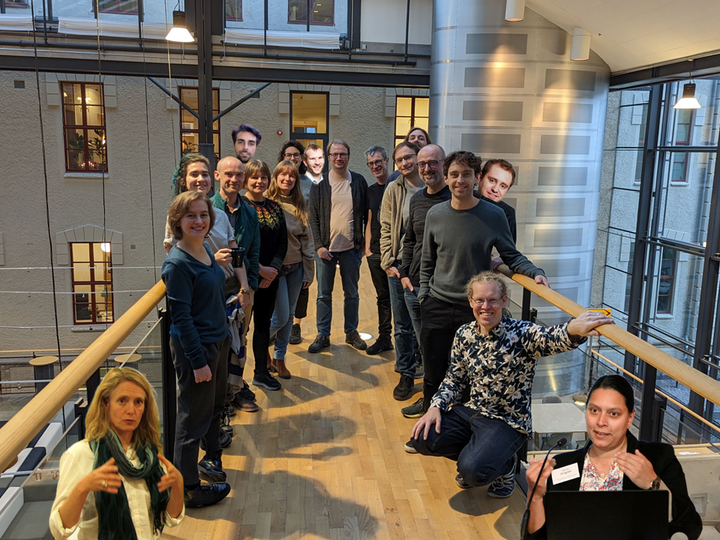
Workshop on “Biodiversity footprint approaches and uses” in Gothenburg, Sweden, November 28th and 29th, 2022.
Participants: Alexandra Marques; Caroline S. S. Franca; Chris West; Daniel Müller; Elin Röös; Florian Schwarzmüller; Gabriela Rabeschini; Giorgio Bidoglio; Heléne Aronsson; Jonathan Green; Koen Kuipers; Martin Bruckner; Martin Persson; Philipp Semenchuk; Rasmus Einarsson; Serina Ahlgren; Thomas Kastner; Ulrika Palme.