Chancen

Equal Opportunities at Senckenberg


To guarantee equal opportunities of women and men is Senckenberg’s aspiration as an employer.

The basis of the equality efforts is the Implementation Agreement on Equality (AV-Glei) of the Joint Science Conference, to which Senckenberg has committed itself in an individual agreement with the Hessian Ministry of Science and Art. A Gender Equality Plan also sets out how the under-representation of women in the relevant areas can be reduced and how the compatibility of career and family can be improved.

The goals of the gender equality policy are:

  • to achieve equality between women and men,
  • to eliminate existing gender discrimination, especially against women, and to prevent it in the future, and
  • to improve the compatibility of work and family for all employees.

Senckenberg offers a variety of measures in order to implement these goals.

chancengleichheit foto

Mentoring programmes

Senckenberg encourages female scientists in particular to take part in mentoring programmes – to reflect on their own ideas in exchange with others, to strategically plan their next career steps and to network. In Hessen, Senckenberg cooperates with the universities and offers programmes for different career stages through Mentoring Hessen: ProCareer.Doc, ProAcademia and ProProfessur. As a member of the Leibniz Association, Senckenberg takes part in the Germany-wide Leibniz Mentoring Leadership Training for Women Scientists.

Women in leadership positions

Senckenberg aims to increase the proportion of women at all scientific career levels. To this end, target quotas have been drawn up using a cascade model in accordance with the DFG’s “Research-oriented Equality Standards”, and concrete measures have been developed as part of an Ggender Equality Plan.

Active recruitment

It is not always enough to publish a job advertisement: active recruitment includes systematic research and personal contact with suitable female candidates. Senckenberg engages in active recruitment in order to attract women in particular to leadership positions in science and research.

Dual Career

In order to enable so-called dual career couples to change location together, partners of top scientists are supported in developing a professional perspective in the same region. Senckenberg is a member of Dual Career Networks in the Rhine-Main region and in central Germany.

Compatibility of career and family

Senckenberg supports its employees with targeted measures to reconcile work and family responsibilities and is continuously developing its family- and life phase-conscious personnel policy with the audit berufundfamilie (see Job and Family). Senckenberg has been certified by the “audit berufundfamilie” since 2012.

Against discrimination

Senckenberg wants to counteract discrimination based on gender, especially of women, and stands up for employees who feel unfairly treated or sexually harassed. The Equal Opportunities Officer and her deputy, the members of the works councils, the AGG Complaints Office in accordance with the General Equal Treatment Act and conflict mediators are available as contact persons for this purpose.

The Equal Opportunities Officers

The practical implementation of equal treatment and the promotion of equal opportunities for women and men are supported by an elected Equal Opportunities Officer and her deputy. They accompany all personnel, organisational as well as social measures from the very beginning, advise employees on issues of equal opportunities and work-life balance and support Senckenberg in complying with the “Research-oriented Equality Standards” adopted by the DFG members as well as the recommendations on equality in the Leibniz Institutes.

If you have any questions about equal opportunities at Senckenberg, please contact the equal opportunities officers.

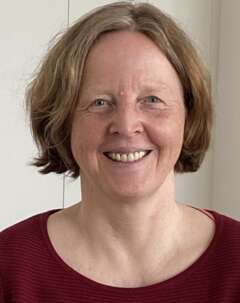
mitarbeiter dörte florack
Dörte Florack
Equal Opportunities Officer
Dr. Nicole Scheunemann
Dr.  Nicole Scheunemann
Deputy Equal Opportunities Officer

born 04/12/1983


Professional activity

since 2018
PostDoc (research assistant)
Senckenberg Museum for Natural History Görlitz
Department of Soil Zoology, Section Mesofauna
Within MediAN Projekt

2015 – 2018
PostDoc (research assistant)
Georg-August-University Göttingen, Institute for Anthropology and Zoology, Department of Animal Ecology

2009 – 2015
PhD student
Georg-August-University Göttingen, Institute for Anthropology and Zoology, Department of Animal Ecology

2008 – 2008
Research trainee
Technical University Darmstadt, Institute of Zoology

2007 – 2009
Student assistant
Technical University Darmstadt, Institute of Zoology


Education

2010 – 2015
Georg-August-University Göttingen

Doctoral candidate in the study programme Biodiversity and Ecology

Degree: Dissertation (Dr. rer. nat.)

Title of dissertation: “Carbon flow in belowground food webs assessed by isotope tracers”.


2003 – 2009

Darmstadt University of Technology

Study of Biology

Main subjects: ecology, zoology, animal physiology

Degree: Diploma (Dipl. biol.)

Title of diploma thesis: “Variations in leaf litter food webs between biomes”.


2025

Ricarda Lehmitz, Karin Hohberg, Martin Husemann, Ralph S. Peters, Nicole Scheunemann, Miklós Bálint, Michael Balke, Judith Bieberich, Iliana Bista, Thomas Borsch, Sarah J. Bourlat, Rainer W. Bussmann, Ulrike Damm, Lara-Sophie Dey, Cecilia G. Flocco, Hans-Peter Grossart, Peter Haase, Hubert Höfer, Valentyna Krashevska, Lars Krogmann, Robert Lücking, Pedro Martinez Arbizu, Rudolf Meier, Ximo Mengual, Nancy F. Mercado-Salas, Jenna M. Moore, Michael C. Orr, Volker Otte, Jörg Overmann, Steffen U. Pauls, Ricardo J. Pereira, Joris Peters, Anton Potapov, Christian Printzen, Florian Raub, Michael J. Raupach, Vera Rduch, Alice Retter, Björn M. von Reumont, Sven Rossel, Rüdiger M. Schmelz, Thomas Schmitt, Markus Scholler, Eckart Stolle, Marco Thines, Cristina Vasilita, Thomas Wesener, Reza Zahiri, Andrey Zaitsev, Jonas Zimmermann, Dagmara Żyła, Bernhard Misof & Klement Tockner (2025): Unknown Germany – An integrative biodiversity discovery program. Npj Biodiversity 4:41. https://doi.org/10.1038/s44185-025-00108-3

2024

Russell, D., Tebbe, C., Ashwood, F., Scheunemann, N. & Hohberg, K. (2024). Beeindruckendes Bodenleben. Natur und Landschaft, Schriften des BfN 99: 426-435, doi 10.19217/NuL2024-09-01.

Eisenhauer N, Ristok C, Guerra CA, Tebbe CC, Xylander WER, Babin D, Bartkowski B, Burkhard B, Filser J, Glante F, Hohberg K, Kleemann J, Kolb S, Lachmann C, Lehmitz R, Rillig MC, Römbke J, Rueß L, Scheu S, Scheunemann N, Steinhoff-Knopp B, Wellbrock N (2024) Bodenbiodiversität. – In Wirth, C.; Bruelheide, H.; Farwig, N.; Marx, J.; Settele; J.: Faktencheck Artenvielfalt – Assessment zum Erhalt der biologischen Vielfalt in Deutschland. München, oekom. DOI: https://doi.org/10.14512/9783987263361

Guerra, C., Eisenhauer, N., Tebbe, C., Xylander, W., Albert, C., … Scheunemann, N., … & Ristok, C. (2024). Foundations for a national assessment of soil biodiversity. J Sustain Agric Environ 3:e12116

Russell, D., Tebbe, C., Ashwood, F., Scheunemann, N. & Hohberg, K. (2024). Beeindruckendes Bodenleben. Natur und Landschaft 99, 426-435

Eisenhauer, N.; Ristok, C.; Guerra, C.A.; Tebbe, C.C.;- … Scheunemann, N.; … & Wellbrock, N. (2024). Bodenbiodiversität. – In Wirth, C.; Bruelheide, H.; Farwig, N.; Marx, J.; Settele; J. (2024): Faktencheck Artenvielfalt – Assessment zum Erhalt der biologischen Vielfalt in Deutschland. München, oekom.

Leibniz Research Network Biodiversity: Thonicke, K., Rahner, E., Arneth, A., Bonn, A., …, Scheunemann, N., … & Wesche, K. (2024). 10 Must Knows from Biodiversity Science 2024.

Potapov, A. M., Chen, T. W., Striuchkova, A. V., Alatalo, J. M., Alexandre, D., Arbea, J., …, Scheunemann, N., … & Scheu, S. (2024). Global fine-resolution data on springtail abundance and community structure. Scientific data, 11(1), 22.

2023

Scheunemann, N., & Russell, D. J. (). Hydrological regime and forest development have indirect effects on soil fauna feeding activity in Central European hardwood floodplain forests. Nature Conservation, 53, 257-278.

Potapov, A. M., Guerra, C. A., Van den Hoogen, J., Babenko, A., Bellini, B. C., Berg, M. P., … Scheunemann, N., … & Scheu, S. (2023). Globally invariant metabolism but density-diversity mismatch in springtails. Nature Communications, 14(1), 674.

2021

Doblas-Miranda E (2021) Soil Ecosystems Change With Time. Frontiers for Young Minds 9:543498. Translation into German.

2020

Potapov A (2020) Springtails—Worldwide Jumpers. Frontiers for Young Minds 8:545370. Translation into German.

Li, Z., Scheunemann, N., Potapov, A. M., Shi, L., Pausch, J., Scheu, S., & Pollierer, M. M. (2020). Incorporation of root-derived carbon into soil microarthropods varies between cropping systems. Biology and Fertility of Soils, 56, 839-851.

2019

Li, Z., Scheunemann, N., Potapov, A. M., Shi, L., Pausch, J., Scheu, S., Pollierer, M. (accepted). The role of root-derived carbon for Collembola nutrition depends on plant type, functional group and species identity.

2018

Pausch, J., Hünninghaus, M., Kramer, S., Scharroba, A., Scheunemann, N., Butenschoen, O., Marhan, S., Bonkowski, M., Kandeler, E., Scheu, S., Kuzyakov, Y., Ruess, L., (2018). Carbon budgets of top- and subsoil food webs in an arable system. Pedobiologia – Journal of Soil Ecology 69, 29-33

2016

Müller, K., Kramer, S., Haslwimmer, H., Marhan, S., Scheunemann, N., Butenschoen, O., Scheu, S., Kandeler, E. (2016). Carbon transfer from maize roots and litter into bacteria and fungi depends on soil depth and time. – Soil Biology & Biochemistry, 93: 79–89.

Pausch, J., Kramer, S., Scharroba, A., Scheunemann, N., Butenschoen, O., Kandeler, E., Marhan, S., Riederer, M., Scheu, S., Kuzyakov, Y.,  Ruess, L. (2016). Small but active – pool size does not matter for carbon incorporation in belowground food webs. – Functional Ecology, 30: 479–489.

Scheunemann, N., Pausch, J., Digel, C., Kramer, S., Scharroba, A., Kuzyakov, Y., Kandeler, E., Ruess, L., Butenschoen, O., Scheu, S. (2016). Incorporation of root C and fertilizer N into the food web of an arable field: Variations with functional group and energy channel. – Food Webs, 9: 39–45.

2015

Scheunemann, N., Digel, C., Scheu, S., & Butenschoen, O. (2015). Roots rather than shoot residues drive soil arthropod communities of arable fields. – Oecologia, 179(4): 1135–1145.

Scheunemann, N., Maraun, M., Scheu, S., & Butenschoen, O. (2015). The role of shoot residues vs. crop species for soil arthropod diversity and abundance of arable systems. – Soil Biology & Biochemistry, 81: 81–88.

2012

Kramer, S., Marhan, S., Ruess, L., Armbruster, W., Butenschoen, O., Haslwimmer, H., Kuzyakov, Y., Pausch, J., Scheunemann, N., Schoene, J., Schmalwasser, A., Totsche, K. U., Walker, F., Scheu, S., Kandeler, E. (2012). Carbon flow into microbial and fungal biomass as a basis for the belowground food web of agroecosystems. – Pedobiologia, 55(2): 111–119.

2010

Scheunemann, N., Scheu, S., & Butenschoen, O. (2010). Incorporation of decade old soil carbon into the soil animal food web of an arable system. – Applied Soil Ecology 46(1): 59–63.